Currency Pairs Explained for Forex Beginners

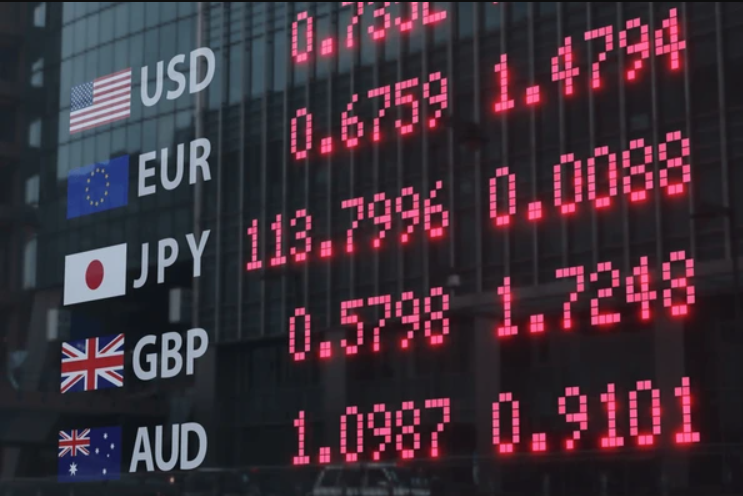
Trading in Forex is fundamentally different from trading stocks or commodities. Instead of a single asset, you’re dealing with two currencies at the same time—the currency pair. This may seem simple at first, but the interaction between currencies is influenced by a complex web of economic factors, geopolitical events, and market sentiment.
Understanding currency pairs isn’t just memorising facts; it’s about understanding relationships, cause-and-effect, and how these dynamics translate into potential opportunities and risks for traders.
Why Currency Pairs Exist
Currency pairs exist because in Forex, every trade involves both a buy and a sell. You’re never just buying Euros or selling Dollars in isolation. The market needs a way to express the relative value between two currencies, because no currency has intrinsic value in absolute terms — it only has value compared to another currency.
If 1 EUR = 1.19 USD today, that’s a snapshot of how the market values the Euro against the Dollar. Tomorrow, if economic growth in the US accelerates, the USD may strengthen, making 1 EUR = 1.10 USD. Even though the Euro didn’t “fall” in isolation, its value relative to the USD changed, which is what matters to traders.
How the Two Currencies Interact
When you trade a currency pair:
- Buying the Base Currency: You believe the base currency will rise in value relative to the quote currency.
- Selling the Base Currency: You believe it will fall in value relative to the quote currency.
You’re effectively betting on the relative strength of one economy against another, not just guessing a currency in a vacuum. That’s why understanding macroeconomic context (interest rates, inflation, political stability) is crucial.
The Types of Currency Pairs — Explained in Depth
1. Major Pairs
Major pairs always include the USD, the world’s primary reserve currency. Their movements are highly liquid and relatively predictable, because they reflect global economic trends.
- EUR/USD reflects not just Eurozone conditions, but also USD demand worldwide.
- Liquidity matters — large institutional traders prefer majors because their large orders have minimal impact on price.
2. Minor (Cross) Pairs
Cross pairs allow traders to speculate on currency relationships without using the USD as a middleman. They are slightly more volatile because liquidity is lower.
- For example, GBP/JPY reacts not just to UK or Japan alone, but also indirectly to USD movements because global traders often hedge USD exposure.
- Understanding correlations is key — minor pairs often move in tandem with major pairs or in predictable inverse patterns.
3. Exotic Pairs
Exotic pairs involve smaller or emerging-market currencies. Prices are influenced not only by domestic economic conditions but also by capital flows, political stability, and speculative trading.
- For Instance, When trading USD/TRY, even a small political announcement in Turkey can trigger a 2–3% move in hours, while major pairs rarely move this fast.
- High potential reward, but also high risk — this is why starting with major pairs is recommended.
Understanding Quotes, Pips, and Spreads — The “Why” Behind Them
- Bid and Ask Prices: The market sets these to reflect supply and demand. The spread represents the broker’s fee and market liquidity. Narrow spreads indicate high liquidity; wide spreads indicate lower liquidity or higher risk.
- Pips: The smallest standardized movement allows traders to measure gains/losses consistently, regardless of currency.
- Lots: Trading in standardized sizes ensures that market impact and risk can be quantified. If everyone could trade arbitrary amounts, pricing would be chaotic and unpredictable.
These mechanics exist to translate market perception into actionable numbers — they’re not arbitrary.
Real-World Thinking: How a Trader Approaches Currency Pairs
- Economic Analysis: Before trading EUR/USD, a trader considers Eurozone inflation, US interest rates, and geopolitical tensions.
- Correlations: GBP/USD might be monitored simultaneously, as it often moves in tandem with EUR/USD.
- Volatility Management: Exotics are avoided until the trader understands spreads, overnight funding, and potential rapid swings.
Example Scenario:
A trader notices the USD is strengthening due to expected Federal Reserve rate hikes. They predict EUR/USD will fall and GBP/USD will fall. They may simultaneously short EUR/USD and GBP/USD. This strategy is not random guesswork; it’s based on analyzing economic relationships and currency correlations.
Why Beginners Must Focus on Understanding Rather Than Memorizing
Many beginners try to learn every pair and quote by rote. This is misleading because the value of a currency pair is never fixed — it’s dynamic and contextual. Real understanding comes from:
- Recognizing how economic fundamentals affect currency strength
- Understanding relative movement and correlations
- Interpreting spreads and liquidity in trading decisions
- Learning risk management through pip and lot sizing
Start small with one or two major pairs. Track how news affects them, watch the spread changes, and see how your predicted movement compares to actual results.
Conclusion
Currency pairs are not just technical jargon—they’re a window into the global economy, allowing traders to interpret the relative strength of nations and make strategic decisions. For beginners, the key is to understand relationships, not just memorize numbers. By focusing on the underlying logic behind how pairs move, how spreads work, and how macroeconomic events influence them, traders gain a deeper, actionable understanding of the Forex market.
Read more articles