AMD: Company Overview and Market Position
Advanced Micro Devices, Inc. (AMD) is a leading name in the global semiconductor industry. Known for designing high-performance processors and graphics solutions, AMD has become a cornerstone of modern computing. Its technologies power everything from personal laptops and gaming consoles to advanced data centers and artificial intelligence systems.
For much of its history, AMD was seen as the underdog compared to rivals like Intel and NVIDIA. Yet through bold strategic decisions, strong leadership, and groundbreaking innovations, the company has reshaped its place in the technology landscape. Today, AMD is not only competing on equal footing with industry giants but has also established itself as a driving force in the digital economy.
Historical Background
AMD was founded in 1969 in Sunnyvale, California, by Jerry Sanders and a team of engineers from Fairchild Semiconductor. Initially, the company produced logic chips and entered the microprocessor market in the 1970s.
Over the decades, AMD became widely recognised for challenging Intel’s dominance in the CPU space. In 2003, it introduced the first 64-bit x86 processor, a milestone in computing. However, AMD also faced significant struggles during the late 2000s, as Intel’s strong product cycles and AMD’s weaker execution led to declining market share and financial instability.
The company’s transformation began in the mid-2010s under the leadership of Dr. Lisa Su, who became CEO in 2014. By focusing on high-performance computing and forming a deep manufacturing partnership with Taiwan Semiconductor Manufacturing Company (TSMC), AMD rebuilt its competitiveness and reputation.
Business Model and Strategy
AMD operates as a fabless semiconductor company, meaning it designs chips but does not manufacture them. Instead, it outsources production to foundries such as TSMC.
This model allows AMD to:
- Access the latest process technologies without bearing the immense cost of owning fabrication plants.
- Focus resources on design, architecture, and performance innovation.
- Scale production more flexibly based on market demand.
The fabless approach has been a critical factor in AMD’s recent success, especially as rivals like Intel faced delays in manufacturing transitions.
Product Portfolio
1. Central Processing Units (CPUs)
- Ryzen (Consumer Market): Launched in 2017, Ryzen CPUs brought AMD back into the spotlight, offering strong performance and competitive pricing for desktops and laptops. Gamers, content creators, and professionals quickly adopted these processors.
- EPYC (Enterprise Market): EPYC server CPUs target cloud providers, data centers, and enterprise systems. Known for high core counts and efficiency, they have been adopted by major players like Amazon Web Services (AWS), Microsoft Azure, and Google Cloud.
2. Graphics Processing Units (GPUs)
- Radeon (Gaming and Professional Use): Radeon GPUs serve both casual gamers and professionals. While NVIDIA remains the market leader, Radeon provides an important alternative in gaming PCs, laptops, and consoles.
- Instinct (Data Center & AI): AMD’s Instinct GPU accelerators are designed for advanced computing, artificial intelligence, and high-performance computing (HPC). The Instinct MI300 series competes directly with NVIDIA’s AI-focused GPUs.
3. Custom and Semi-Custom Solutions
AMD provides custom chips for devices such as Sony PlayStation and Microsoft Xbox consoles. These long-term partnerships highlight AMD’s strength in delivering tailored solutions for the consumer electronics industry.
Market Position
Competing with Intel
AMD has significantly expanded its presence in the CPU market. In 2017, its global desktop CPU market share was around 13%, while by 2023 it reached approximately 33%. In server CPUs, AMD’s EPYC line has steadily gained adoption, reducing Intel’s once near-total dominance.
Competing with NVIDIA
In GPUs, AMD holds a smaller share compared to NVIDIA, which controls around 80% of the discrete GPU market. However, AMD’s Instinct series is making progress in AI and HPC markets, especially as demand for alternatives to NVIDIA grows due to supply constraints and cost considerations.
Financial Strength
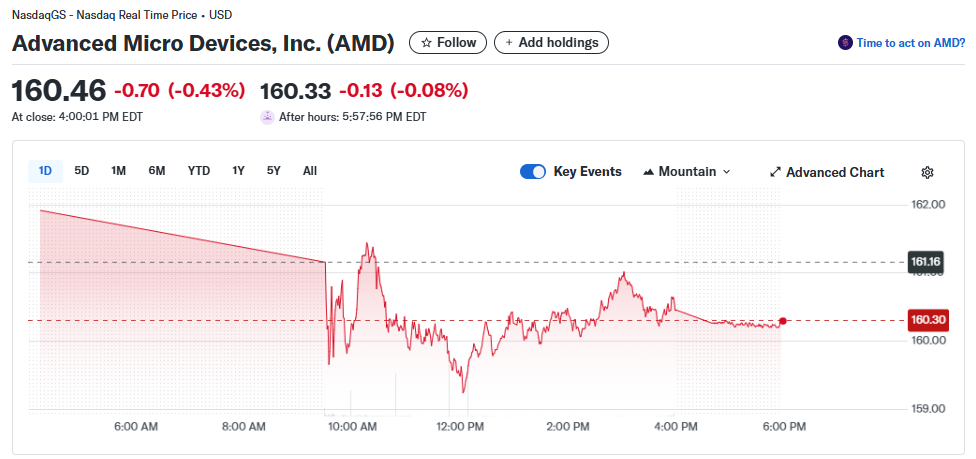
AMD’s resurgence is reflected in its financial performance and investor confidence. In 2023, AMD’s market capitalisation surpassed Intel’s for the first time, standing at $177 billion compared to Intel’s $137 billion. This milestone emphasised the shift in market dynamics and AMD’s strengthened position in the semiconductor industry.
Key Factors Behind AMD’s Success
Several factors explain AMD’s rise over the past decade:
- Leadership: Dr. Lisa Su’s strategic vision emphasised performance leadership and diversification.
- Partnerships: Collaboration with TSMC gave AMD access to cutting-edge manufacturing technologies.
- Product Innovation: Competitive Ryzen and EPYC CPUs restored confidence among consumers and enterprises.
- Diversification: Expanding into gaming consoles, data centers, and AI reduced reliance on a single revenue stream.
Future Outlook
AMD’s future will be shaped by trends in artificial intelligence, cloud computing, and advanced gaming technologies. The company aims to expand its role in data centers with EPYC processors and Instinct accelerators, targeting both traditional computing and AI workloads.
While NVIDIA remains the leader in AI GPUs, AMD’s expanding software ecosystem (such as ROCm for developers) and aggressive roadmap signal a determination to capture market share. Moreover, as industries from healthcare to finance adopt AI and HPC solutions, AMD’s role in providing high-performance, cost-effective alternatives will likely grow.
However, the semiconductor industry remains highly competitive and cyclical. AMD must continue to innovate rapidly, manage supply chain risks, and maintain strong relationships with foundries to sustain its momentum.
Conclusion
AMD’s journey is a story of resilience, innovation, and strategic reinvention. From being overshadowed by Intel to surpassing it in market capitalisation, AMD has transformed into a global leader in high-performance computing. Its Ryzen and EPYC CPUs, Radeon and Instinct GPUs, and custom chip solutions illustrate a diversified approach that positions the company across consumer, enterprise, and AI markets.
For traders, investors, and technology professionals, AMD serves as a powerful example of how strategic shifts, partnerships, and execution can change the trajectory of a company — and by extension, influence the entire technology industry.
Read more articles